Linda | Trapeziectomy
“I completely trusted Mr Harley.”
For many years, arthritis was a constant part of Linda’s life. What began as general arthritis gradually developed into osteoarthritis, bringing pain and discomfort that moved from her knee to her shoulder, then to her hand.
“The pain really started about 13 years ago,” Linda says. “Over time, it became harder to ignore. Living on my own, I treasure my independence and the activities that give me joy. I love crafts and gardening, but they were becoming difficult.
“Everyday tasks were becoming increasingly painful, and I realised the danger of putting things off for too long. It was getting too much. I thought, surely there must be something someone can do.”
When Linda’s right hand worsened, she visited her GP and had an X-ray. The results showed physiotherapy wouldn’t be sufficient, and specialist treatment was advised. Having had previous operations at The Horder Centre, the sister hospital of The McIndoe Centre, she asked to be referred there again.
She had a consultation with Mr Oliver Harley, Consultant Plastic and Reconstructive Surgeon, who explained her thumb joint was no longer sitting properly in its socket and would require a trapeziectomy. Linda was also told she had carpal tunnel syndrome and treatment for that condition could take place at the same time.
The trapeziectomy, which involves removing a small bone at the base of the thumb called the trapezium, and the carpal tunnel release, a surgery that relieves pressure on the median nerve in the wrist by cutting the ligament that compresses it, were day-case procedures at The McIndoe Centre.
Linda said: “I wasn’t nervous about the surgery. I was fine throughout. I stayed in the hospital for a few hours afterwards for monitoring, where I had a cup of tea and a sandwich, then went home.”
Follow-up care included weekly visits to the hand nurse at The Horder Centre for wound checks, dressing changes, and recommended exercises.
Recovery went smoothly. Linda was able to prepare her own meals but reduced the amount of housework.
Three years later, when similar symptoms appeared in her left hand, she recognised them early and chose to have the same procedure again.
“I feel as good as new,” said Linda. “I was surprised by how quickly you can get back into things. Although there’s a slight loss of strength, I’m back to gardening, needlework, fine art, and travelling to London for courses. My biggest fear was not being able to do what I love. Instead, I’ve improved my manipulative skills rather than ending up with clumsy, claw-like hands.
“I completely trusted Mr Harley. He’s professional, kind, and genuinely cares; I don’t know what I would have done without him.”
Linda
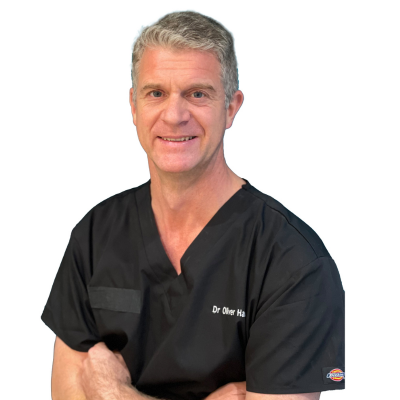
Mr Harley added: “Thumb arthritis is a common condition that can make even simple daily activities, such as preparing and eating meals, painful. A trapeziectomy is a day-case procedure that involves removing a small bone at the base of the thumb called the trapezium.
“The thumb generally functions very well without this bone, and around 95% of patients experience significant pain relief while maintaining good hand function. My own data shows that, on average, hand function is less than 50% of normal before surgery, improving to around 90% of normal following trapeziectomy.
“Linda’s experience is typical of the positive outcomes we see after surgery. It is not unusual for both thumbs to be affected by arthritis, and for patients to have other common hand conditions, such as carpal tunnel syndrome, at the same time.
“The results of trapeziectomy are long-lasting, particularly when techniques are used that incorporate a strip of tendon to create a supportive loop and cushion in place of the trapezium bone.”
Find out more about the McIndoe Centre
We provide outstanding patient experiences
As a nationally recognised hospital of excellence in plastic, reconstructive, ophthalmic and maxillofacial surgery, we have demonstrated ourselves to be: effective, responsive, caring, safe and well-led. Recently rated ‘good’ by the CQC, we are committed to treating our patients and each other with kindness, respect and dignity resulting in life-changing outcomes.

Patient testimonials
Find out what it’s like to be a patient, from the people who matter the most.